
Under the Safeguards Rule, you need a written information security program that protects nonpublic personal information through encryption, access controls, vendor oversight, audit logging, and documented testing. Every one of those controls has to scale to your institution's size and complexity. Auditors will ask for evidence, not promises, so your documentation matters as much as your technology.
TL;DR:
- Encryption must be implemented with TLS 1.2 or higher for data in transit and AES-256 for data at rest, using FIPS 140-3 validated cryptographic modules where possible.
- Access controls require individual credentials for every employee, with role-based permissions, multi-factor authentication, and immediate deprovisioning when roles change or employees leave.
- File protection should include visible watermarks and file-level encryption with revocable access, with careful key management and thorough version control for document revisions.
- Vendor contracts must explicitly require encrypted data, audit logging, breach notification timelines, and proof of security attestations, with ongoing risk reassessment and evidence collection.
- Regular testing of controls should match risk levels, with quarterly vulnerability scans, annual independent penetration tests, and documented incident response procedures for large data breaches.
Table of Contents
- What Does GLBA Document Security Actually Require?
- How Do You Protect a File After It Leaves Your Systems?
- What Should Vendor Contracts Require for GLBA Compliance?
- How Often Should You Test and Monitor Your Controls?
- Why Local-First Document Workflows Change the Compliance Calculus
- Where LawtonPDF Fits Into Your GLBA Document Security Program
- Sources
- FAQ
What Does GLBA Document Security Actually Require?
GLBA document security starts with a written information security program covering administrative, technical, and physical safeguards, tailored to the size, complexity, and sensitivity of the customer information you handle. A five-person credit union and a regional lender both need the program. Neither needs the identical control set, because the rule scales to what you actually process.
The technical baseline is specific. Under 16 C.F.R. § 314.4(d), you must encrypt customer information both in transit over external networks and at rest. TLS 1.2 or higher covers transfers. AES-256 covers data at rest. Where you have a choice of cryptographic modules, look for ones validated against FIPS 140-3, the current federal standard for cryptographic hardware and software. It's not explicitly mandated by name in the rule text, but examiners treat FIPS-validated modules as strong evidence that your encryption choices were deliberate, not accidental.
File transfer protocol matters more than most compliance teams realize. Acceptable methods include SFTP, FTPS, and HTTPS with TLS 1.2 or better. Plain FTP has no place in a GLBA environment, and emailing NPI as an unencrypted attachment is one of the fastest ways to fail an exam.
Access control expectations are just as concrete:
- Every employee gets individual credentials. No shared logins, ever.
- Role-based access control limits exposure to only the data a job function requires.
- Least privilege means default access is "none" until a business need is documented.
- Multifactor authentication protects any system touching customer files.
- Deprovisioning happens the day someone leaves or changes roles, not at the next quarterly review.
Quick fact: Examiners frequently cite lack of active, ongoing program management as a deficiency, even when the underlying controls look fine on paper. A static security policy that nobody updates is treated the same as no policy.
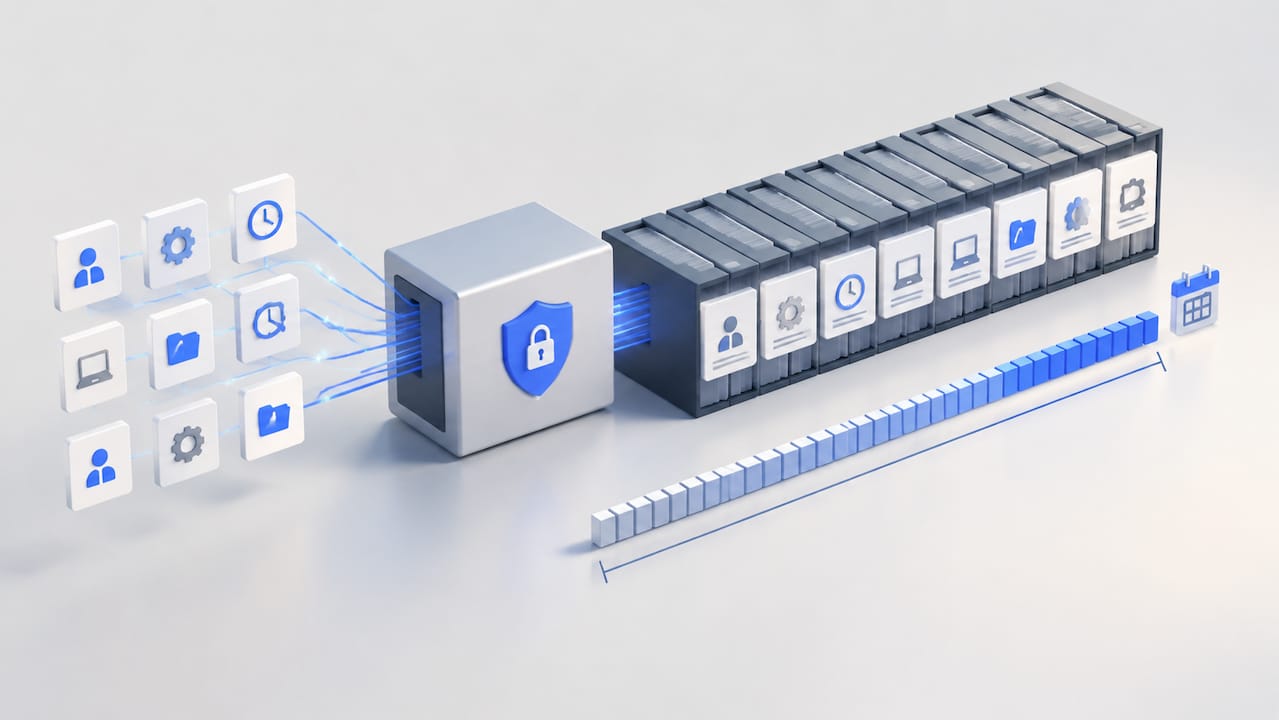
Your logs need to answer four questions for every file touch: who, when, from where, and what action. That means immutable timestamps, user attribution, source IP addresses, and a clear action type (upload, download, modify, delete). Keep logs long enough to reconstruct an incident timeline during an exam, not just long enough to satisfy a minimum retention checkbox.
How Do You Protect a File After It Leaves Your Systems?
Protection has to travel with the document, not just live on the server that stored it first; you can use tools to add visible watermarks to shared documents as an operational control to deter misuse and reinforce document handling policies. Per-file encryption with embedded access policies lets you revoke access to a document even after it's been downloaded, emailed internally, or handed to a vendor. That single capability answers one of the harder Safeguards Rule questions: how do you enforce "encrypt at rest" when the file is sitting on a third party's infrastructure you don't fully control? Practitioner guidance on the Safeguards Rule points to file-level cryptography as the practical answer.
Key management is where a lot of programs quietly fail. Follow this sequence:
- Store cryptographic keys in hardware-backed modules, not in flat files or shared drives.
- Separate the person who manages keys from the person who approves access requests.
- Rotate keys on a fixed schedule, not "whenever someone remembers."
- Log every key access event with the same rigor you apply to document access.
- Prefer FIPS 140-3 aligned modules wherever your infrastructure supports them.
Version control deserves more attention than most programs give it. When a document has passed through multiple hands, revisions, or approval stages, you need a reliable way to prove what changed, when, and who made the change. A dependable comparison tool that flags every edit between drafts gives you provenance evidence examiners can review in minutes instead of an afternoon.
Pro Tip: Run a side-by-side comparison before you archive any finalized customer document. It takes thirty seconds and gives you a clean, dated record that the final version matches what was approved, which is exactly the kind of evidence examiners ask for when a document's history gets questioned.
Disposal is the last mile most programs neglect. Paper records need cross-cut shredding or a certified destruction vendor. Electronic records need secure deletion that overwrites data, not a simple move to the recycle bin. Interagency guidance treats disposal procedures as a core safeguard, not an afterthought, so document the disposal date, method, and responsible party for every batch of records you retire.
What Should Vendor Contracts Require for GLBA Compliance?
Every contract with a service provider touching customer information needs specific, enforceable language. General "we take security seriously" boilerplate won't satisfy §314.4(f) or an examiner reviewing your vendor file.
Your contracts should require:
- Encryption of NPI both in transit and at rest, matching your own internal standard.
- Audit logging the vendor will produce on request, not just retain internally.
- Breach notification duties with a specific timeline, not "as soon as reasonably possible."
- Guaranteed deletion or return of customer information at contract termination.
- Current security attestations such as SOC 2 reports or, for government-adjacent vendors, FedRAMP authorization.
Vendor oversight doesn't stop at signature. Score every vendor's risk at onboarding, then reassess annually or sooner if their risk profile changes. Collect actual evidence, not verbal assurances: request the SOC 2 report, review penetration test summaries, and track remediation timelines when a vendor reports a finding. If a vendor can't produce evidence after repeated requests, that's a termination trigger, not a footnote.
For examiners, your risk register entries, assessment reports, and remediation timelines tell the oversight story. The institution retains legal liability for NPI even after a vendor mishandles shared data, which is exactly why deletion and access-revocation proof at contract end belongs in your permanent compliance file.
How Often Should You Test and Monitor Your Controls?
Testing cadence should match risk, not calendar convenience. High-risk systems, anything touching NPI directly, warrant continuous monitoring. Run vulnerability scans quarterly. Schedule penetration tests annually, and bring in an independent reviewer periodically to check your own testing team's blind spots.
Your logs and reports need specific fields to satisfy an examiner: user ID, action taken, timestamp, source IP, and file identifier. Retain logs in an easily accessible format for at least 90 days, with longer-term archival for anything tied to an open investigation or a documented incident.
Board reporting should include a risk assessment summary, recent test results, current remediation status, and a clear timeline for any corrective action plan still in progress. Skip the technical jargon in board materials; the board needs to see risk trend and remediation velocity, not packet-level detail.
Incident response deserves its own rehearsed procedure. Large incidents affecting 500 or more consumers carry a 30-day notification trigger, and your documentation needs to show exactly when detection happened, when containment started, and what changed afterward. A documented breach response plan built before an incident, not during one, is the difference between a controlled disclosure and a scramble.
Why Local-First Document Workflows Change the Compliance Calculus
Local, offline processing keeps NPI inside your institutional control from the moment a file is created to the moment it's archived. That matters most for your highest-sensitivity documents, immature vendor relationships, or situations where you can't yet get contractual proof of a vendor's safeguards. Every hop a document takes outside your walls is another point of exposure and another vendor contract you have to police.
Offline comparison tools produce something examiners genuinely value: local audit trails and side-by-side change evidence that never touched a third-party server. When you can show a document's full revision history without pointing to a cloud provider's logs, you've simplified your own oversight burden considerably.
— Lawton
Where LawtonPDF Fits Into Your GLBA Document Security Program
There are tools available that help compliance teams handle sensitive customer files without adding another vendor to the risk register. Every PDF operation, from password protection to file comparison, runs locally on your own hardware, with no cloud processing step to document, contract, or audit.
That local-first design directly answers a problem this article keeps circling back to: every third party touching NPI is another oversight obligation. LawtonPDF's offline PDF comparison generates the kind of version-control evidence examiners ask for, without a single file leaving your network. Its password protection tools support the file-level access control your written information security program needs to demonstrate. For teams managing document workflows across multiple staff, centralized administration keeps license and access records in one place, which is exactly what an examiner wants to see when asking who could touch what. If you're building or refreshing your document security controls for this exam cycle, start with a trial of the full tool set and pilot it against one compliance workflow before rolling it out further.
Sources
Bookmark these for your written program and board materials: the FTC's Safeguards Rule guidance, the interagency information security standards, and the encryption standards text at 16 C.F.R. § 314.4. Cite these directly in policy documents rather than paraphrasing secondhand summaries.
This article is general information, not a substitute for advice from a qualified financial advisor. Consult a qualified financial professional about your own circumstances before acting on anything here.
- 16 C.F.R. § 314.4 — Standards for safeguarding customer information
- Updates — Gramm-Leach-Bliley Act cybersecurity requirements
- Interagency guidelines establishing information security standards
FAQ
What Is the GLBA Safeguards Rule?
It's the section of the Gramm-Leach-Bliley Act requiring covered financial institutions to build a written information security program with administrative, technical, and physical safeguards to protect customer information.
Does GLBA Require Encryption for All Documents?
Yes, for customer information in transit over external networks and at rest, per 16 C.F.R. § 314.4(d), which points to standards like TLS 1.2+ and AES-256.
How Long Should We Retain Access Logs?
Keep logs in an easily accessible format for at least 90 days, with longer archival for records tied to any open incident or investigation.
Can Local-First Tools Like LawtonPDF Help With GLBA Compliance?
Yes. Local, offline processing with tools such as LawtonPDF keeps customer files off third-party servers entirely, which reduces vendor oversight obligations and produces local audit evidence for exams.
What Happens if We Fail a Safeguards Rule Exam?
Deficiencies typically result in a corrective action plan with a remediation timeline, and repeated or serious failures can affect eligibility for certain government program participation.