To ignore formatting in compare and see only real text changes, uncheck "Formatting" under Review > Compare > Compare Settings in Word, or export both files to plain text and run a diff. For PDFs, use a text-only compare mode when your tool offers one, or extract the text first. When settings won't stick, or the files are confidential, a local tool that runs the whole comparison offline is your most reliable fallback.
TL;DR:
- Unchecking "Formatting" in Word's Compare settings ignores font, style, and layout changes, but does not hide actual content edits unless the setting stays persistent.
- Word's compare preferences may reset unexpectedly due to settings linked to templates or software versions, so saving templates or automating the setting improves reliability.
- Comparing PDFs requires text extraction or a text-only compare mode to avoid layout-based differences, with OCR needed for scanned documents to minimize false positives.
- Extracting documents to plain text and using a diff tool with whitespace-ignoring flags provides the most consistent and secure way to analyze content changes without formatting noise.
- Using local comparison tools like Lawtonpdf ensures sensitive documents remain private, especially when comparing high volumes of files or when dealing with confidential legal, financial, or health data.
Table of Contents
- How to Ignore Formatting in Word's Compare Tool
- Why Word Reverts Your Formatting Settings
- Can You Compare PDFs Without Formatting Differences?
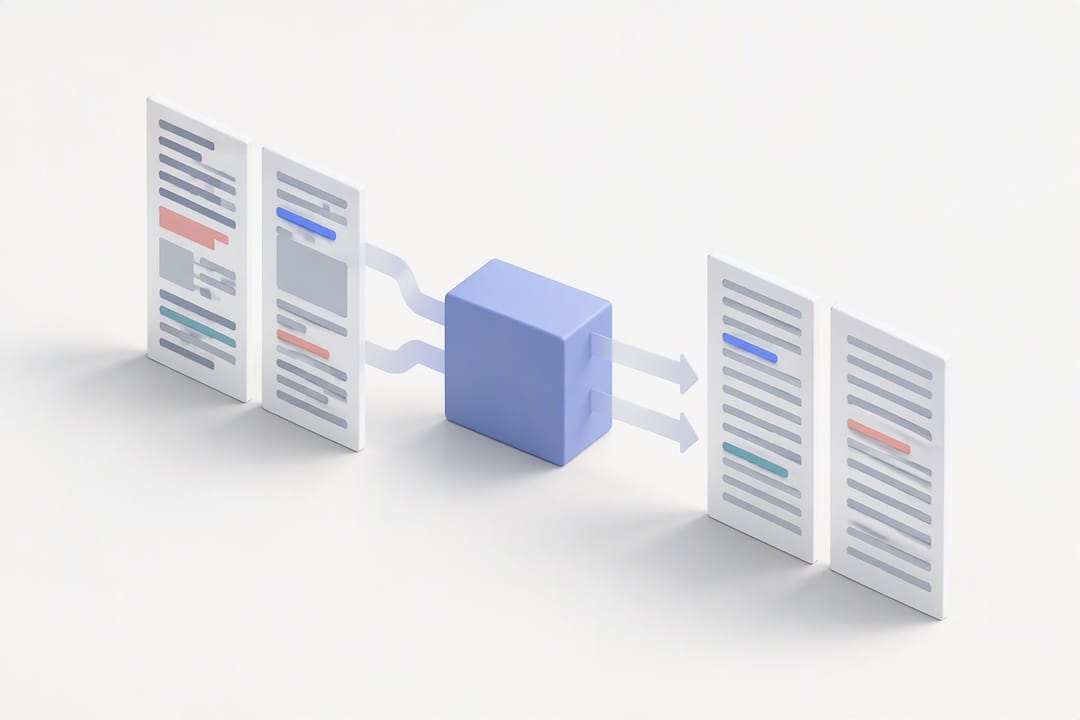
- Extract to Plain Text, Then Diff: A Reliable Fallback
- Why Local Comparison Matters for Sensitive Documents
- A Compact Workflow Worth Adopting
- Try a Local Compare Tool Built for Text-Only Accuracy
- Where to Verify Settings and Commands
- Sources
- FAQ
How to Ignore Formatting in Word's Compare Tool
Word buries this setting one click deeper than most people expect, which is why so many reviewers give up and just scroll past the noise manually. It doesn't have to be that way.
- Open the Review tab and click Compare, then choose Compare… from the dropdown.
- Select your original document and the revised version in the two boxes provided.
- Click More in the bottom left corner to expand the comparison settings.
- Under "Show changes in," uncheck Formatting to ignore formatting changes. Leave Insertions, Deletions, and Moves checked.
- Click OK to generate a comparison document with formatting noise stripped out.
Unchecking Formatting hides changes to font, paragraph spacing, alignment, and style differences. It does not touch actual content edits, so an inserted sentence or a deleted clause still shows up as a tracked change. This distinction matters when you're reviewing a contract redline: you want to see that a liability cap changed from 90 days to 30 days, not that someone reformatted the heading font from Calibri to Arial.
A community thread on Microsoft's support forum confirms this exact setting path works for suppressing formatting revisions in Word 365, though it also documents a recurring complaint: the setting sometimes resets to include formatting changes. Before you compare, save fresh copies of both files, confirm you're working from the correct final versions, and preview the result before circulating it to a reviewing team.
Why Word Reverts Your Formatting Settings
Word's compare preferences live in an odd spot. Sometimes they attach to the document template, sometimes to the session, and sometimes they just reset when a colleague on a different Word build opens the same file. A Superuser thread on this exact frustration shows it's a widely shared problem, not a one-off glitch on your machine.
A few fixes tend to hold up better than re-toggling the checkbox every time:
- Save a template with your preferred compare settings baked in, and start every comparison from that template.
- Write a short macro that sets the formatting-ignore flag automatically when you open Word, so you're not relying on memory.
- If you're comparing documents programmatically, use an API's
CompareOptions.IgnoreFormattingproperty instead of the GUI default, which developers can call directly through libraries like Aspose.Words. - When none of that sticks, extract the text from both files and run a plain-text diff instead. It sidesteps Word's settings entirely.
Pro Tip: If your team compares the same document types every week, a macro that fires on document open is usually faster than fighting the Compare dialog each time. Superuser's own thread on this problem backs up that approach as a common workaround.
Can You Compare PDFs Without Formatting Differences?
PDFs complicate things because "formatting" in a PDF often means the entire visual layout, not just font choices. Acrobat's Compare Files feature is built to flag layout shifts, which is useful when you're checking a redesigned brochure but frustrating when you just want to know if a clause changed in a 40-page agreement. It will often report a paragraph as "changed" simply because text reflowed onto a different line after a margin adjustment.
Two approaches get you closer to a clean, text-only comparison:
- Use your PDF tool's text-only compare mode if it has one. Some tools, including browser-based diff checkers, offer a dedicated setting that strips layout and focuses on the words themselves.
- Export each PDF to plain text first (File > Export To > Plain Text, or the equivalent in your compare tool), then diff the two text files directly. For scanned documents, you'll need OCR before this step works at all.
OCR introduces its own noise. A blurry scan, the wrong recognition language, or inconsistent OCR settings between your two files can generate spurious differences that have nothing to do with the actual content, as diff-tool guidance on OCR-related false positives points out. Clean scans and matching OCR language settings on both files cut down on that noise considerably.
Extract to Plain Text, Then Diff: A Reliable Fallback
When a GUI setting won't behave, extracting text and running a dedicated diff tool is the most dependable way to guarantee a comparison that ignores formatting entirely. There's no checkbox to lose, no template to maintain. Here's the sequence:
- Export or copy the text from both documents into plain
.txtfiles. - Normalize line endings so one file isn't using Windows-style breaks while the other uses Unix-style breaks, which otherwise creates false diffs on every line.
- Run a diff tool with whitespace-ignoring flags enabled.
- Review the output for word-level changes rather than line-level noise.
Git's diff documentation lists the flags that matter most here: -w or --ignore-all-space ignores all whitespace, -b or --ignore-space-change treats runs of whitespace as equivalent, and --ignore-blank-lines skips lines that are empty in both versions. These flags were built for code, and they work well on structured or plain-text documents too.
For long-form prose, though, a line-based diff is often the wrong tool. Contracts and reports read better through a word-level diff, which is why tools like TextFileCompare highlight individual word changes with toggles for ignoring case and whitespace, rather than flagging an entire paragraph as "different" because one word moved.
Why Local Comparison Matters for Sensitive Documents
Uploading a merger agreement or a patient record to a browser-based diff tool means that file now exists somewhere outside your control, even briefly. For legal, finance, and healthcare teams, that's rarely an acceptable trade for convenience.
Processing comparisons locally removes that exposure entirely. Nothing leaves your machine, so there's no upload step to secure, log, or explain to a compliance officer.
- No file ever touches a third-party server, which matters under confidentiality obligations and internal data policies.
- Large or complex PDFs and Word files often compare faster locally, without upload and download time eating into your review window.
- LawtonPDF runs its comparisons entirely on your computer, supporting PDF, Word, text, and folder-level comparisons in one local application.
If your team already follows a structured redline workflow, swapping in a local tool for the comparison step is a small change with an outsized privacy benefit.
A Compact Workflow Worth Adopting
A practical approach is to try the in-Word formatting toggle first, as it is quick and often effective. When it reverts or produces messy output, fall back to extract-and-diff with whitespace flags enabled. For anything sensitive, high-volume, or recurring, whether that's quarterly financial statements or client contracts, move the whole job to a local tool from the start rather than troubleshooting Word's settings each cycle.
Build that escalation path into your team's review checklist rather than leaving it to individual habit. A documented comparison workflow that names the tool and settings for each document type saves new team members from relearning the same Word quirks everyone else already fought through.
— Lawton
Try a Local Compare Tool Built for Text-Only Accuracy
Lawtonpdf is the alternative to browser-based diff checkers and cloud compare tools: every comparison runs on your own hardware, so contracts, financial statements, and patient files never leave your machine to get a clean, formatting-free diff.
That matters most when you're comparing high volumes of Word or PDF files and can't risk a single upload going to a server you don't control. Lawtonpdf's PDF comparison tool and text compare tool both support formatting-ignore workflows out of the box, whether you're reviewing a redline or checking a reformatted report against its source. Legal and finance teams can consider plans with team management features, while individual reviewers can explore available free options to test the comparison engine on real files. Pricing details for the Plus and Business plans are available on the pricing page. If you're ready to stop uploading sensitive documents just to see what changed, download Lawtonpdf and run your next comparison locally.
Where to Verify Settings and Commands
For the exact Word setting path, check Microsoft's own Q&A thread on formatting toggles in Track Changes. Developers automating comparisons should reference Aspose's CompareOptions documentation, and anyone scripting a diff pipeline should bookmark Git's diff-options reference for whitespace flags. For a quick manual test, TextFileCompare offers a free browser-based checker.
Sources
- Turn off the "Track Changes Option" for "Formatting" Permanently, or Until I Decide to Turn it Back on
- Git - diff-options Documentation
- CompareOptions.IgnoreFormatting property — Aspose.Words documentation
- Text Compare Online — Free Diff Checker | TextFileCompare
FAQ
How Do I Turn Off Automatic Formatting in Word Compare?
Go to Review > Compare > Compare…, click More, and uncheck Formatting under "Show changes in." This stops font, spacing, and style changes from appearing as tracked revisions, as confirmed in Microsoft's community documentation on the setting.
How Do I Stop Word From Showing Formatting Changes?
Uncheck the Formatting box in the Compare Settings dialog before running your comparison. If the setting doesn't persist, save a template with your preferred configuration or use a short macro to reapply it each time you open Word.
How Do You Turn Off Formatting Marks in a Comparison?
Formatting marks (like paragraph symbols) are a display setting, separate from the Compare tool's formatting-change detection. To ignore formatting differences specifically in a comparison, use the Compare dialog's Formatting checkbox rather than the paragraph-mark toggle in Word's Home tab.
How Do I Get Rid of Formatting Noise Entirely?
Extract both documents to plain text and run a diff tool with whitespace-ignoring flags like -w or --ignore-all-space, as documented in Git's diff options. This removes formatting from the comparison completely since plain text carries no styling information.
Does Lawtonpdf Support Text-Only Comparison?
Yes. Lawtonpdf compares PDF, Word, and text files locally, letting you focus on substantive content changes without uploading files to an external server. Current pricing for the Plus and Business plans is listed on the pricing page.